
The spiritual disciplines of the Christian life are practices we can perform that enable us to show our love for God and through which God can transform us with His love into ‘deep people’.
This sermon was delivered at Illawara Church of Christ on Sunday, 30 August 2026. It is based indirectly on Colossians 1:3–6, 9-14.[1]
The audio of my presentation was recorded but not a video, so I have created this video using the presentation slides for the sermon.
Transcript
It is truly a pleasure to join you again and to share with you some reflections on the scriptures we all hold dear. At Ps. Peter’s invitation, I want to speak specifically to the topic of the classic Spiritual Disciplines.
The Rogue Dressed as a Captain

To begin, let me tell you the fascinating story of “The Captain of Köpenick”:
One day in October 1906, the 57-year-old ex-convict Wilhelm Voigt dressed himself in the uniform of a Prussian captain, [which he] assembled from several second-hand stores. So equipped, Voigt intercepted two squads of soldiers who were going off duty, and ordered the soldiers to accompany him to the town hall of the Berlin suburb of Köpenick.
Once at Köpenick, claiming to act on “All-Highest command”, Voigt arrested the mayor and other town officials, and had the town’s cash handed over to him in two large sacks. He departed with the money and sent the officials in a car to the police station at Berlin’s Neue Wache (English: New Guard), guarded by several of the soldiers. Only at the Neue Wache did the officials learn that the “All-Highest” had not in fact ordered their arrest.[2]
According to Tim Harford, on his podcast Cautionary Tales,
Some say we humans will obey orders from anyone who dresses the part … but the real reason why we fall for tricksters time and again is far more interesting. Fraudsters and charlatans reel us in slowly by using psychology against us.[3]
In effect, tricksters and con artists promise us what we want so they can get from us what they want.
The subtlety of such trickery is on display in the opening chapters of The Book of Genesis, where the serpent promised the first humans what we all want so he could get what he wants —namely, his revenge on God our Creator!
Genesis 1 vs. 3
We know humankind is made to be the image, or likeness, of God, thus giving us sovereignty and stewardship over the planet as co-workers with God.[4] In other words, we were made to be in relationship with our Creator.
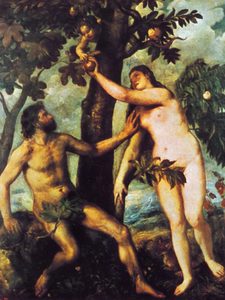
In Genesis 2:15-17, God placed the first humans in the Garden but commanded them not to eat of the Tree of the Knowledge of Good and Evil for “you shall surely die”. So, they were like God AND had access to eternal life at their creation.
The serpent deceived the first humans into thinking God was withholding knowledge from them that would make them “like gods, knowing good and evil” (Gen 3:1-7). He tricked them by promising them what they really wanted, which was to be equal to God and therefore independent from God.
What the first humans failed to remember was they were already the image of God at their creation. Yet in knowing good and evil directly, through experience, they became “like gods”[5] in the worst sense and had access to eternal life stripped from them, for their own protection (Gen 3:22-24).
So, being the image of God and knowing good and evil are two different states of being. One gives hope and meaning and purpose and leads to eternal life, where the other results in corruption and chaos and the curse of sin that leads to death.
The question at the beginning of this sermon then is: Do you want to be in relationship with God or independent from God?
The “Place of Transformation”
The consequences of choosing independence from God remain with us, leading university chaplain and theologian D. Elton Trueblood to exclaim,
The greatest problems of our time are not technological … They are not even political or economic …The greatest problems are moral and spiritual, and unless we can make some progress in these realms, we may not even survive.
(D. Elton Trueblood)[6]
I look around at the state of our world and could not agree more wholeheartedly!
Our gadgets will not save us, we cannot buy our way out of our problems, nor can we compromise our way to a solution. Our rejection of our Creator is a moral decision resulting in a spiritual malaise that corrupts everything. We must address the problem in order to find a solution.
Author and theologian Richard Foster has therefore argued,
The desperate need today is not for a greater number of intelligent people, or gifted people, but for deep people. (Foster, pg.1)
What and Why?
I want to describe for you now the spiritual disciplines of the Christian life. For the purpose of maintaining our relationship with our Creator, the spiritual disciplines are practices you and I can perform that enable us to show our love for God through which God can transform us with His love into ‘deep people’.
Before I continue, let us pray:
[Almighty God],
by the power of your Spirit
give us Your words of life
that our faith may increase and our hearts
be made whole.
[For we pray in Jesus’ name.] Amen.[7]
Spiritual Growth Through Spiritual Discipline
I am sure it is no surprise to you that relationships do not grow unless we put time and energy into them. A relationship with our Creator is life-giving and transforms us into the people He always intended us to be, which is far better than we could ever imagine or achieve for ourselves.
Yet, how do we cultivate that relationship? We do so with the classic spiritual disciplines.
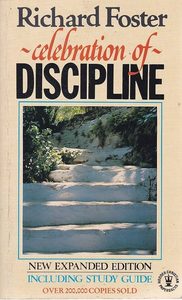
I was first introduced to the classic spiritual disciplines when I attended a conference in Sydney in the 1990s led by Richard Foster. He wrote an outstanding introductory book on the subject called “Celebration of Discipline”, which is the inspiration and primary source for this sermon. I learned at that conference there are many more spiritual disciplines beside simple prayer and Bible reading, and that my spiritual journey might be enhanced by integrating other disciplines alongside these.
The spiritual disciplines are crucial for the friends of Jesus because, as Foster notes,
The classical Disciplines of the spiritual life call us to move beyond surface living into the depths. (Foster, pg.1)
The spiritual disciplines are for the friends of Jesus what the pills represent in the “Matrix” movies.

There is a standout scene in the first movie where Thomas Anderson, aka Neo, is offered a red pill and a blue pill by the rebel leader Morpheus. By ingesting the blue pill Neo will remain in his relatively comfortable dream world; with the red pill, Morpheus will show Neo the real world, a choice from which there is no turning back.
Offered such a choice, would you take the red pill or the blue pill? Would you prefer the dream to the reality? The shallow life to the depths of God’s love?
When our ‘eyes have been opened’ and we have encountered God, we cannot go back to selfish and superficial living.
When we choose to place our faith in Jesus and live a Christian lifestyle, we become sensitive to our mistakes and to the Spirit’s prompting. Our sense of God’s love for us compels us to compassion, for instance. Deepening this experience takes time and effort.
The opposite is also true: Our love for God will diminish if not nurtured. Spiritual growth, like our original spiritual awakening, occurs only with intention on our part. Yet, spiritual growth does not require special resources nor that we leave our ordinary lives behind. According to Foster,
God intends the Disciplines of the spiritual life to be for ordinary human beings: people who have jobs, who care for children, who wash dishes and mow lawns. In fact, the Disciplines are best exercised in the midst of our relationships with our husband or wife, our brothers and sisters, our friends and neighbours. (Foster, pg.1)
Exercises for Everyone
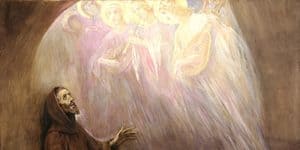
Spiritual giants throughout history provide inspiration for our spiritual growth, but are not the standard. Whether you are inspired by John the Revelator, St Anthony of Egypt, St John of the Cross, Julian of Norwich, Thomas à Kempis, or any other ‘stand-out’ saints, their spiritual insight and ascetic lifestyle encourage us to find our own, deeper path.
To give just one example, when asked for the secret of his success, Gen. William Booth said:
I will tell you the secret. God has had all there was of me. There have been men with greater brains than I, men with greater opportunities. But from the day I got the poor of London on my heart and caught a vision of all Jesus Christ could do with them, on that day I made up my mind that God would have all of William Booth there was. And if there is anything of power in the Salvation Army today, it is because God has had all the adoration of my heart, all the power of my will, and all the influence of my life.[8]
Gen. Booth had a deep and fervent prayer life, but he was also a man of service. He was a spiritual giant and an inspiration to me.
Foster reminds us,
… the Spiritual Disciplines are not hard. We need not be well advanced in matters of theology to practice the Disciplines … The primary requirement is a longing after God. (p.2)
This echoes Jesus’ own words,
Blessed are the ones who hunger and thirst for righteousness, because they will be satisfied. (Matthew 5:6)
This is a promise and a hope of Jesus for us. He wants us to want more of Him and to be with Him. Foster continues by musing,
Perhaps somewhere in the subterranean chambers of your life you have heard the call to deeper, fuller living. You have become weary of frothy experiences and shallow teaching. Every now and then you have caught glimpses, hints of something more than you have known. Inwardly you long to launch out into the deep. (Foster, p.2)
Neither superficial nor nominal Christianity can ever satisfy the genuine cry of the heart for righteousness.
Superficial forms of Christianity actually encourage the worship of the self, spiritual escapism and even addiction to certain experiences. Those forms of faith never release us from the grip of sin.
Neither will our own effort succeed, for as Foster noted,
Willpower will never succeed in dealing with the deeply ingrained habits of sin … When we despair of gaining inner transformation through human powers of will and determination, we are open to a wonderful new realisation: inner righteousness is a gift from God to be graciously received.
(Foster, pg. 5-6)
In contrast with superficial Christian faith, the Spiritual Disciplines break down our distraction with our self that we may focus on God, thereby creating a space for Him to transform us.
Our world is hungry for genuinely changed people. Leo Tolstoy observes, ‘Everybody thinks of changing humanity and nobody thinks of changing himself.’ Let us be among those who believe that the inner transformation of our lives is a goal worthy of our best effort. (Foster, pg.11)
Three Categories of Spiritual Disciplines
In his book, Richard Foster describes three categories of Spiritual Disciplines. They are the Inward, the Outward, and the Corporate Disciplines. Each category has four discipline types within it.
The Inward Disciplines are disciplines that transform your inner self, your attitudes. This category includes the disciplines of Meditation, Prayer, Fasting and Study. The Outward Disciplines transform your behaviours and includes Simplicity, Solitude, Submission and Service. The Corporate Disciplines are practised within a worshipping community. Disciplines within this category include Confession, Worship, Guidance and Celebration.
Each discipline category and type can be practised independently of the others; there is no formula or prescribed pattern dictated, only recommended. We each prayerfully choose the Disciplines which are most appropriate and helpful to us at any given time.
The Inward Discipline of Meditation
I cannot cover each of these categories nor disciplines today, but let me describe for you one example: the inward discipline of Meditation, sometimes called contemplation. Trappist monk and theologian Thomas Merton has stated,
True contemplation is not a psychological trick but a theological grace.
(Thomas Merton, p.19)
To which Foster adds,
If we hope to move beyond the superficialities of our culture, including our religious culture, we must be willing to go down into the recreating silences, into the inner world of contemplation. (p.20)
Contemporary society is characterised by noise, hurry and crowds. The anxiety that results tears us apart, both literally and figuratively. Meditation gives us back our perspective.
The Bible uses two different Hebrew words … to convey the idea of meditation … In each case there is stress upon changed behaviour as a result of our encounter with the living God. (p.19)
It is this continual focus upon obedience and faithfulness that most clearly distinguishes Christian meditation from its Eastern and secular counterparts.
(p.20)
Some biblical examples include,
The old priest Eli knew how to listen to God and helped the young boy Samuel know the word of the Lord (1 Sam 3:1-18). Elijah spent many a day and night in the wilderness learning to discern the “still small voice of Yahweh” (1 Kgs 19:9-18). Isaiah saw the Lord “high and lifted up and heard his voice saying, “Whom shall I send, and who will go for us?” (Isa 6:1-8). Jeremiah discovered the word of God to be “a burning fire shut up in [his] bones” (Jer 20:9). And on march the witnesses. These were people who were close to the heart of God. God spoke to them not because they had special abilities, but because they were willing to listen. (Foster, pg.20)
“Christian meditation, very simply, is the ability to hear God’s voice and obey his word” (p.21). Christian meditation can often be confused with prayer. They are similar but different by intention. By praying, we make known our praise and petition to God; in meditating, we listen to God speak to us and share with us His will.
In the fulness of time Jesus came and taught the reality of the kingdom of God and demonstrated what life could be like in that kingdom. He established [the Church] that would know him as Redeemer and King, listening to him in all things and obeying him at all times. In his intimate relationship with the Father, Jesus modelled for us the reality of that life of hearing and obeying. (Foster, pg.21-22)
“What happens in meditation is that we create the emotional and spiritual space which allows Christ to construct an inner sanctuary in the heart … Inward fellowship of this kind transforms the inner personality” (p.24).
“The Russian mystic Theophan the Recluse says, ‘To pray is to descend with the mind into the heart, and there to stand before the face of the Lord, ever-present, all seeing, within you’ ” (p.23).
“William Penn notes, ‘True godliness does not turn men out of the world, but enables them to live better in it and excites their endeavours to mend it’ … Meditation sends us into our ordinary world with greater perspective and balance” (p.26).
Meditation 101
I hope you are beginning to see just how valuable and helpful the inward discipline of Meditation is to a Christian lifestyle. Now the question remains, “How to do it?”
There is no great exercise or essential method to meditation. English hymn writer and theologian Frederick W. Faber poetically described the experience in this way:
Only to sit and think of God,
Oh what a joy it is!
To think the thought, to breathe the Name
Earth has no higher bliss. (Frederick W. Faber, incorrectly attributed to A.W. Tozer, pg. 28)
Indeed, “all who acknowledge Jesus Christ as Lord are the universal priesthood of God and as such can enter the Holy of Holies and converse with the living God” (p.28). We have a right and responsibility to come before God, yet we do so with humility and respect.
God’s voice CAN be heard, yet our modern minds are shaped by rationality alone. Foster describes how “we can descend with the mind into the heart most easily through the imagination” (p.29).
To believe that God can sanctify and utilise the imagination is simply to take seriously the Christian ideal of incarnation. God so accommodates, so enfleshes himself into our world that he uses the images we know and understand to teach us about the unseen world of which we know so little and which we find so difficult to understand. (Foster, pg.30-31)
A Time to Meditate
We begin the practice of this spiritual discipline by making time for meditation. “We must come to see, therefore, how central our whole day is in preparing us for specific times of meditation” (p.31). This is similar to the encouragement of the apostle Paul, who challenged us in 1 Thessalonians 5:17 to “pray constantly”. Both are attitudes guiding our lifestyle rather than serving as prescriptions for our daily activities.
Another principle is made apparent in that “the Church Fathers often spoke of Otium Sanctum, ‘holy leisure’. It refers to a sense of balance in the life, an ability to be at peace through the activities of the day, an ability to rest and take time to enjoy beauty, an ability to pace ourselves” (p.31-32). With such a balance, we can remain mindful of God even in the midst of apparent busy-ness.
This balance is made possible through meditation, among other disciplines, so make time to meditate.
A Place to Meditate
If we can truly enter that state of being where we do indeed “pray constantly”, then a location for meditation is but a secondary concern. With enough practice and the correct attitude, one can meditate anywhere; however, the realities of everyday life are such that finding a place to meditate that is free of distraction is paramount.
A Posture to Meditate
Along with the importance of a time and a place, we need to recall how “the body, the mind, and the spirit are inseparable” (p.32); therefore, finding a position and/or furniture that makes you completely comfortable, without putting you to sleep, is also important for meditation.
Forms of Meditation
Putting these three considerations together leads us to a number of different forms of meditation.
Meditatio Scripturarum
The first form I would like to share with you is called meditatio Scripturarum, a Latin phrase for meditating on scripture. “For all the devotional masters the meditatio Scripturarum, meditating upon Scripture, is the central reference point by which all other forms of meditation are kept in proper perspective” (p.33)
“[Meditating on Scripture] centres on internalising and personalising the passage. The written Word becomes a living word addressed to you” (p.33).
“…take a single event, or a parable, or a few verses, or even a single word and allow it to take root in you. Seek to live the experience … apply all our senses to our task” (p.34).
“Always remember that we enter the story [of scripture] not as passive observers, but as active participants. Also remember that Christ is truly with us to teach us, to heal us, to forgive us.” Another fancy Latin phrase is Anamnesis, which is our ultimate goal in all forms of worship:
[Anamnesis] means “remembrance” or “recollection”. In Hebrew the sin offerings cannot remove sins but remind us of them (cf. Num. 5:15). In 1 Cor. 11:24 Christians are to enact the Lord’s Supper in a recollection of Jesus which has the form of active re-presentation as the action of Jesus and the disciples is repeated.[9]
With the aim to achieve anamnesis, we enter into the story of scripture as if we were present then and there. The story of scripture becomes our story, our faith, by meditating on scripture.
Lectio Divina is a formal and collective form of meditatio Scripturarum in which a group reads a passage together and meditates on it together, seeking to allow the Spirit to speak in the moment to those so gathered.
Meditating on Scripture is the first form of Meditation to be aware of and to practice.
Centring Down
Another form of meditation is called Centring Down and “is a time to become still, to enter into the recreating silence, to allow the fragmentation of our minds to become centred” (p.35). This is the form that will most readily come to your mind when you think of meditation.
“Palms Down, Palms up” is one form of Centring Down meditation where we submit to God and accept from God all He wants to give. It involves beginning with your palms down, as you offer to God all your worries, struggles and stresses; then turning your palms up to receive from God His peace, comfort and guidance. You do not need to utter any words; let the symbolic hand gestures carry you in the moment, when words are not enough.
“Centring Prayer” is another form that uses “a sacred word as the symbol of your intention to consent to God’s presence and action within you”,[10] thereby acting as a focal point against distracting “thoughts, sensations, or feelings”. This form resembles the notorious Transcendental Meditation made famous by celebrities, yet has its benefits when centred on Christ.
Examples (one word or a very short phrase) might be:
- “Jesus”
- “God”
- “Abba” (Father)
- “Maranatha” (“Our Lord has come” or “Our Lord is coming”)
- “Come, Lord”
The key is simplicity and personal meaning, not a formal chant with a specific meaning.
Meditation Upon Creation
Another form is Meditation Upon Creation. Through the elements of this world and universe God reveals his glory, “so give your attention to the created order” (p.36). Take a walk in nature —or a run— listening to the sounds and savouring the smells. Be attentive to the textures and note the sights. All of this is from God and draws us closer to Him.
Meditation Upon Events
The final form of Meditation I want to describe for you today is Meditation Upon Events, which is “… to meditate upon the events of our time and to seek to perceive their significance” (p.36) —and simply watching the news does not count. Attend to the events and the culture of our time with intention; discern with the heart of God.
Conclusion
In comparison to prayer, meditation can almost seem impossibly hard. How are you going to find time, not to mention quiet, enough to ‘do nothing’? It is this misconception that Meditation is ‘doing nothing’ that predisposes us to other Spiritual Disciplines.
Listening to God is an ‘art’ of the Christian life and it is a necessary art. How can anyone possibly say they know God’s will if we have not given Him the space in our lives through which He can communicate to us?
Give yourself some time, a place and a posture for meditation this week. Be still before God, listen for Him and listen to Him.
Alongside the more typical Bible reading and prayer, there are many disciplines besides these forms of Meditation that Christians have used from the days of Jesus until today, practices which they have found helpful and through which God has brought spiritual transformation into their lives. Yet there is no prescribed path; only disciplines with which you can experiment until you find the complement that serves you best and draws you into that deep place with God.
Endnotes
[1]Unless otherwise noted, all scripture quotations are taken from W. Hall, Harris III et al., eds., The Lexham English Bible (Bellingham, WA, USA: Lexham Press, 2012).
[2]Hett, Benjamin Carter. “The ‘Captain of Köpenick’ and the Transformation of German Criminal Justice”, 1891–1914, Central European History 36, no. 1 (2003): 1-43.
[3]Tim Harford, “The Rogue Dressed as a Captain”, Cautionary Tales Ep 2, 15-Nov-2019, https://bit.ly/3ljQN5e (accessed 12-Sept-2021).
[4]See also Gn 5:1,3; 9:6; Rm 8:29; 1Co 11:7; 15:49; 2Co 3:18; 4:4; Eph 4:24; Col 1:15; Jms 3:9.
[5]Because they now had direct experience of evil, they became “like God” in some sense. However, this is a troubling idea because God is holy and therefore does not himself have direct experience of evil, never having committed an evil act. It would be interesting to know what is meant here but that has been lost to antiquity.
[6]As quoted in Richard Foster, Celebration of Discipline (Hodder and Stoughton: London, GB, 1989), pg viii. All quotes, unless indicated otherwise, are from this book.
[7]Reprinted by permission of Westminster John Knox Press from Feasting on the Word® Worship Companion, ©2015.
[8]Source unknown; quoted at “William and Catherine Booth: Their life and ministry with photos”, The Gospel Truth, https://bit.ly/3kaZaka (accessed 15-Sept-2021).
[9]Kittel, G., G. Friedrich, & G. W. Bromiley. Theological Dictionary of the New Testament. (Grand Rapids, Mich.: W.B. Eerdmans, 1995, c1985.) Page 56.
[10]“Centering Prayer Guidelines”, Beliefnet. http://www.beliefnet.com/story/3/story_306.html (Accessed 4 February 2005).

Leave a Reply