
The friends of Jesus are alert to dangers and blessings, but because we trust his power and provision and promise, we are alert to opportunities to do good.
This sermon is based on Matthew 25:1-13 and was delivered on Sunday, 8 November 2026 at Campbelltown Regional Mission
Introduction
Joanna Ng Led to Information Technology Rather Than Psychology
Joanna Ng left her home in Hong Kong to study at university in Canada. While there, she became a Christian in her first year of university and that was when God intervened in her life in a good, but unexpected, way.
In an episode of The Language of God podcast, Joanna explained what she calls an “interruption”:
So I aspired to be a psychologist ever since I was in grade eight. So I read every book about Psychology. And then when I got into university, the first year was general study. And at the end of the first year, I was supposed to submit a form to declare the major for second year onward. So a no-brainer, I filled in the major as Psychology because that was my childhood dream. But by then, I was already a Christian. I was a new Christian, newly baptised. And when I filled in the form, according to my aspirations since childhood, there was an unexplainable unrest, and the lack of peace that came from nowhere. I got my parents’ approval, everything was fine. There was really practically, in reality, nothing could stop me from majoring Psychology and pursue a career there. But I absolutely had zero peace and I couldn’t sleep and I couldn’t eat and I didn’t know why. But I knew enough that it could come from God.
So I went back and prayed about it, and I said, “What’s going on?” And so that went on for a few days, and then I cried out to God and said, “Look, I don’t have plan B. So if you want to interrupt me, you need to open my eyes to see what path you want for me. But I surrender my career into you, it’s just that I saw no plan B.” So after, I was willing to surrender 100%, not knowing what was the answer. Once I surrendered, the Lord opened up my eyes in the first year because I was late in registering classes. So I took all the computer courses as my optional courses. In Canada, we call them ‘bird courses’, like French took French, and Chinese took Chinese, so we could bump up the GPA.
So I took all the Computer Science courses as my bird courses, and I treated them like bird courses. I did very little effort and focus on my psychology classes. I didn’t know they were supposed to be hard, because with very little effort, I did really, really well. And then I felt the Spirit was saying, “Are you blind? Did you not see what your other classmate struggle despite of all the effort, and to you it came easy? That was how I wired you.” So, by faith, I filled in majoring in computer science. And all of a sudden, there was a tremendous peace, that was so supernatural from head to toe that came. And I didn’t know what I was signing up for other than so naively thinking, C programming sounds easy because it’s C, and I didn’t know that there was a lot more into it.
And that’s how I got into the technology field. But because it was so divinely started, I knew God had the purpose to put me there. And then the rest is history, because doors just opened from having a career in IBM, and not just a programming job, but work in groundbreaking technology project by project by project…[1]

Joanna is world renowned for her capacity and insight in turning complex abstractions and theories and research outcome into useful products and solutions. She held a seven-year tenure as the Head of Research and Director of the Centre for Advanced Studies, IBM Canada Lab, and is accredited as an IBM Master Inventor. Yet, she only got into information technologies because, in her words, the Holy Spirit “opened my eyes”. She experienced a deep sense of peace as she signed up for computer science courses. Joanna is basically responsible for inventing e-commerce at IBM —which is a boon for some and a misery for others 🙂
Would Joanna have made a good psychologist? Perhaps. But the Holy Spirit knew better what she was designed for and how she could make a powerful impact in this world. She has found her purpose in not only inventing and mentoring inventors, but calling the world to ethical standards around the implementation of AI, as well as sharing the good news about Jesus wherever, whenever and however she can.
What & Why?
Most of us live our lives reactively. Living reactively means one is primarily responding to events or circumstances around us. Reactive living often involves making decisions based on immediate pressures or demands, instead of following a long-term plan or vision. This can lead to a feeling of being out of control, as if one is constantly putting out fires rather than moving forward toward goals.
Those who have discovered meaning and purpose live proactively. Living proactively means taking charge of your own life, making decisions and taking actions oriented toward your goals, rather than merely reacting to events as they happen. It involves taking responsibility, planning ahead, goal setting, decision making, problem-solving and self-improvement. In short, living proactively is about being an active participant in your life, rather than a passive spectator.
The friends of Jesus most definitely fall into the proactive category, for we have discovered meaning and purpose in the eternal purpose of God. As a result, we are intentionally and intensely watchful for the danger as well as for the blessings promised.
Before I get into this topic proper, let us pray:
Send your Spirit to move in our world
and stir the water of our souls
that we may desire a word of instruction
that awakens us to the joy of your coming reign.
In Jesus’ name we pray. Amen.[2]
Watchfulness for Dangers
Peter the apostle warned,
Be sober; be on the alert. Your adversary the devil walks around like a roaring lion, looking for someone to devour. (1 Peter 5:8; see also Proverbs 4:23)[3]
While some will try to convince you the Christian life is all sunshine and rainbows, the fact is humankind is in the midst of a spiritual battle. Placing your faith in Jesus and living a Christian lifestyle puts you and I in the crosshairs of an adversary.
What are some of the dangers we should be watchful for?
The Danger of False Teaching
There is the danger of false teaching —but you won’t get any of that here, not if I can help it! On this, Jesus warned,
Beware of false prophets who come to you in sheep’s clothing, but inside are ravenous wolves. (Matthew 7:15)[4]
Giving them the benefit of doubt, false prophets and teachers may not consciously intend to teach falsely, for they may not be aware of their own biases or lack of understanding of the scriptures and how to apply them. It behooves each of us to recognise truth by being deeply aware of the truth of God ourselves, so that we can avoid the dangers of false teaching, whether intentional or accidentally delivered.
The Danger of Temptation
While the friend of Jesus has recognised and turned away from their sin, there remains the ongoing danger of temptation. On this, Jesus warned,
Stay awake and pray that you will not enter into temptation. The spirit is willing, but the flesh is weak! (Matthew 26:41)[5]
We can only protect ourselves from temptation by growing in Christ and relying on the Spirit.
The Danger of Neglecting the Word of God
Moses warned the ancient Israelites,
Take care for yourself and watch your inner self closely, so that you do not forget the things that your eyes have seen, so that they do not slip from your mind all the days of your life; and you shall make them known to your children and to your grandchildren. (Deuteronomy 4:9)[6]
The friend of Jesus takes heed of Moses’ warning of the danger of neglecting the word of God. The scriptures are useful for teaching and training in righteousness (2Tim 3:16). Let us meditate on the scriptures as often as we can and study them so that we not fall into this danger.
The Danger of Speaking Sinfully
The last danger I will highlight is that of speaking sinfully. The friend of Jesus joins with the psalmist who prayed,
I said, “I will guard my ways
that I may not sin with my tongue.
I will keep a muzzle over my mouth
as long as the wicked are before me.” (Psalm 39:1)[7]
In praying thusly, we commit our thoughts and our speech, as well as our actions, in worship to and service of the Lord, knowing it is too easy to sin in how we speak to our neighbour, even as it is easy to sin when we do not speak well of our neighbour.
The Christian lifestyle is filled with hope and joy and peace, so the friends of Jesus are watchful for the dangers because our faith makes us wise rather than foolish.
Watchfulness for Blessings
The friends of Jesus are watchful for the dangers, yet we should also be very much aware there are blessings also to be watchful for. As the psalmist wrote,
My eyes are continually toward Yahweh,
because he will take my feet from the net. (Psalm 25:15)[8]
The Lord rescues his friends from danger and so they are watchful for the blessings he brings.
Watchfulness for the Return of Jesus Christ
As Jesus taught in his parable of the ten virgins —is there any reason why he could not have just called them “ten young ladies”?— his friends are watchful for his return. He taught this explicitly elsewhere when he said,
Therefore be on the alert, because you do not know what day your Lord is coming! But understand this: that if the master of the house had known what watch of the night the thief was coming, he would have stayed awake and would not have let his house be broken into. For this reason you also must be ready, because the Son of Man is coming at an hour that you do not think he will come. (Matthew 24:42–44)[9]
This sounds ominous but it is only so for those still in their sin. The friends of Jesus are hopeful of his return, when he will come to judge the living and the dead, reward the faithful, and comfort those who have suffered for him. At his return, the kingdom of God will be fully inaugurated. All wrongs will be righted, our full humanity restored and peace renewed.
The friends of Jesus are hopeful so we anticipate his return and do not want to be caught unprepared.
Watchfulness for Opportunities to Serve the Lord
The friends of Jesus prepare for his return by being watchful for opportunities to serve the Lord in the meantime. Peter the apostle wrote,
set Christ apart as Lord in your hearts, always ready to make a defense to anyone who asks you for an accounting concerning the hope that is in you. (1 Peter 3:15)
We serve the Lord by being his witnesses. We also serve him by being careful in our lifestyle to avoid evil (Eph 5:15–16), acting wisely and speaking graciously (Col 4:5–6).
The friends of Jesus also watch for opportunities to serve in meeting the needs of others. Paul the apostle advised,
with all prayer and supplication praying at all times in the Spirit, and to this end being alert with all perseverance and supplication for all the saints (Ephesians 6:18)
We serve the Lord by praying blessing on others and interceding on their behalf, for health and healing among other things. We also intercede on behalf of the nations and against the systems of this world that corrupt and destroy.
We also serve the Lord by comforting those in sorrow and being present for those who are troubled (Mt 26:36–40), we work for the good of all (Ga 6:10), ready at all times and encouraging others in the same (Tt 3:1).
Watchfulness and Prayer
It is clear in all of this how the watchfulness of the friends of Jesus begins in prayer and is maintained with prayer, as it is written,
Be devoted to prayer, keeping alert in it with thanksgiving, praying at the same time for us also, that God may open for us a door of the message, to speak the mystery of Christ, for which also I am a prisoner (Colossians 4:2–3)[10]
Jesus spoke of those having eyes to see and ears to hear (Mt 13:16). With this image he was speaking of those who are spiritually alive and awake to God our creator. That awareness grows with prayer and is directed by prayer.
Contrast With the Watchfulness of Unbelievers With Evil Intent
The watchfulness of the friends of Jesus helps us avoid the dangers and prepares us to both receive and give blessings. This stands in stark contrast with the watchfulness of those still in their sins, having evil intent. The psalmist wrote of this,
The wicked watches for the righteous
and seeks to kill him. (Psalm 37:32)[11]
The friends of Jesus take heart because he has overcome the world (Jn 16:33). Nevertheless, the world will not stand for our righteousness and will subvert the kingdom of God at every opportunity. Be watchful of those with evil intent.
Warning Against Neglect of Watchfulness
The friends of Jesus are watchful for the dangers and watchful for the blessings. But the greatest danger of all is our neglect of watchfulness. As it is written,
Be on the alert and strengthen the remaining things that are about to die, for I have not found your works completed before my God. Therefore remember how you have received and heard, and observe it, and repent. If therefore you are not on the alert, I will come like a thief, and you will never know at what hour I will come against you. (Revelation 3:2–3)
The Lord will return, just as he promised. And if we are not watchful for him, where then will we find the motivation to mature in our knowledge and wisdom, and to live righteously in this world, following his commands and example? He has promised a free, full and forever life to his friends, but this requires effort on your part to live in and for this promise. There will be no reward for those he finds have neglected to remain watchful and have thus fallen back into sin.
Getting back to Jesus’ parable,
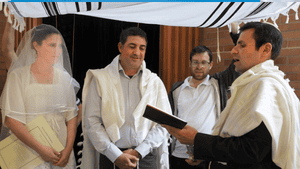
It helps to know a bit about the wedding customs of the day. Weddings in Jesus’ day were every bit as emotionally [charged] as ours today, with the same potential for mishap. Guests assembled at the home of the bride and were entertained by her parents while waiting for the groom. When the bridegroom approached, the guests, including the bridesmaids, [lit] torches and went out to greet him. In a festive procession, the entire party walked to the groom’s home where his parents were waiting for the ceremony and the extended banquet that would follow and continue for several days. Jesus, his mother, and his disciples were guests at such a wedding in Cana.
In this parable, for whatever reason, the groom does not show up on time; the hours pass, and many of the waiting wedding party fall asleep. Finally, at midnight, they are awakened with a shout, “He’s coming.” The bridesmaids leap into action, trim their lamps, and head out to meet him. Five of the ten have used up their oil and have no reserves. Their attempt to borrow some from their wiser, more prudent sisters is rejected. Frantically, they set out in search of oil, not easy at midnight, and in the process miss the procession. When they finally arrive at the groom’s home, they are locked out and dismissed.[12]
The bridesmaids had a job to do: to wait for the groom and lead the procession to the wedding and celebration. They had all they needed for their job; all they had to do was to be ready and to execute their mission admirably. Some succeeded and some failed miserably.
At the heart of our faith is the certainty human history has a purpose and a goal, and that it is moving toward eventual fulfilment and completion. The friends of Jesus have a mission, a mission which involves waiting expectantly for our Lord and, in the meantime, to live faithfully, courageously, hopefully.
Like those still living in their sin and under the curse of death, the friends of Jesus can be genuinely afraid for our own personal future. Perhaps you are facing serious illness, surgery, or a loss of employment. Each of us need to hear the good news that the bridegroom will come, that the love of God will continue to appear in our lives in surprising and unexpected ways:
- for Christ comes when his friends live in hope and never give up;
- Christ comes when his friends faithfully express love and compassion and work for justice;
- Christ comes when critically ill people know they are ultimately safe in God’s love; and,
- Heaven breaks into Earth when faithful women and men live in hope and give themselves to the work of the kingdom.
Let us watch for God-the-Father, whose power and provision is visible all around, which encourages us to trust his promise and that his eternal purpose will be realised.
Let us watch for God-the-Son, who will come again to judge the living and the dead.
Let us watch for God-the-Spirit, who teaches, convicts, empowers and guides, and let us celebrate the evidence thereof.
Conclusion
The friends of Jesus are alert to danger and blessing, but because we trust his power and provision and promise, we are alert to opportunities to do good. Let us be prepared for the Kingdom to come and live as if it is here fully already!
Endnotes
[1]Jim Stump, “Joanna Ng | Data, Truth, & AI”, Biologos, 2-Nov-2023, https://replug.link/7aebe273 (accessed 3-Nov-2026).
[2]Reprinted by permission of Westminster John Knox Press from Feasting on the Word® Worship Companion, ©2015.
[3]Unless otherwise noted, all scripture quotations are taken from The Lexham English Bible (Bellingham, WA, USA: Lexham Press, 2012).
[4]See also Psalm 94:8; Proverbs 8:33–34; Matthew 24:4–5; Mark 8:15; Romans 16:17; 1 Corinthians 16:13.
[5]See also Deuteronomy 4:15; 1 Kings 2:4; Luke 12:15; 17:1–3; 1 Corinthians 10:12; Galatians 6:1; 2 John 8.
[6]See also Joshua 22:5; 1 Kings 2:3; Hebrews 2:1; 12:25; 2 Peter 1:19.
[7]See also Psalm 141:3; Proverbs 13:3; 21:23; James 1:26; 3:5–8; 1 Peter 3:10.
[8]See also Psalm 59:9; 123:1–2; 130:5–6; Isaiah 40:9; Micah 7:7; Luke 2:25; 2:36–38.
[9]See also Matthew 25:1–13; Mark 13:32–37; Luke 12:35–40; 21:32–36; 1 Thessalonians 5:4–8; Revelation 16:15.
[10]See also Matthew 26:41; Mark 13:33; Luke 21:36; Ephesians 6:18; 1 Peter 4:7.
[11]See also 1 Samuel 18:9; 1 Samuel 19:11; Psalm 10:8; Jeremiah 20:10; Matthew 26:16; Mark 3:2; Acts 9:24.
[12]John M. Buchanan, “Pastoral Perspective on Matthew 25:1–13,” Feasting on the Word: Preaching the Revised Common Lectionary: Year A, ed. David L. Bartlett and Barbara Brown Taylor, vol. 4 (Louisville, KY, USA: Westminster John Knox Press, 2011), pg 284–286.

Leave a Reply